

What is Uveitis?
Uveitis [u-vee-i-tis] is a term for inflammation of the eye. It can occur in one eye or both eyes and affects the layer of the eye called the uvea [u-vee-uh]. It also can be associated with inflammation of other parts of the eye and last for a short (acute) or a long (chronic) time. Uveitis can be serious and lead to permanent vision loss. That is why it is important to diagnose and treat uveitis as early as possible, ideally before irreversible damage has occurred. Uveitis causes about 30,000 new cases of blindness each year in the United States.
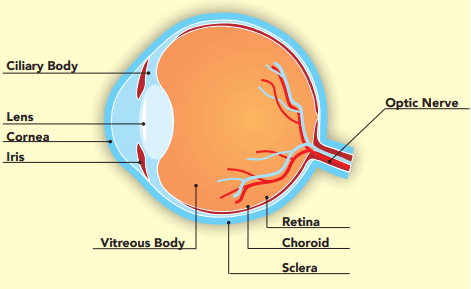
The uvea is a layer of the eye made up of three parts from the front to the back of the eye that helps provide nutrients to the eye.
Fact Sheets to Share and Print
What Causes Uveitis?
Uveitis is a form of inflammation of the eye. The cause of uveitis is often unknown in at least one-third of cases. The inflammation could be caused by:
- Eye injury or surgery
- Infection
- Autoimmune diseases or systemic inflammatory disorders that affect the whole body
Uveitis Symptoms
Uveitis symptoms may occur quickly in an acute form (lasts less than six weeks) or slowly in a chronic form (lasts longer than six weeks). These symptoms may get worse fast, and also may affect one or both eyes.

Red eyes

Sensitivity to light

Blurry vision
What Increases the Risk for Uveitis?
Uveitis can affect anyone at any age, but it is most commonly seen in working age adults in their fourth decade. There is a higher prevalence in women. As we age, however, we are more likely to get uveitis in both eyes and panuveitis (uveitis that affects all of the uvea). In addition, smoking may increase the risk of getting uveitis.
What are the Types of Uveitis?
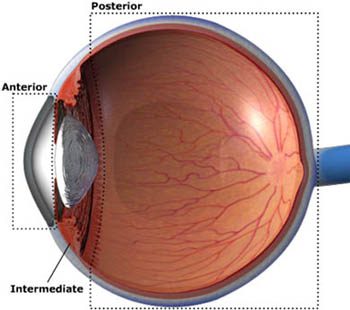
Uveitis is often grouped by the part of the uvea it affects. There are four types of uveitis:
- Anterior uveitis
- Intermediate uveitis
- Posterior uveitis
- Panuveitis
How do Eye Doctors Check for Uveitis?
Diagnosis and Treatment
Diagnosis and treatment of uveitis is important. Uveitis can cause permanent damage to the eyes and vision loss that cannot be reversed. Also, uveitis may be caused by another disease or condition that, if left untreated, can lead to serious illness.
How is Uveitis Treated?
The goal of treatment is to treat the inflammation and check the eyes regularly to help prevent damage and vision loss. Eye doctors treat uveitis to relieve pain, prevent vision loss from inflammation and complications of uveitis, and to treat the cause of the uveitis if known. It is important to follow the eye doctor’s instructions for treatment carefully throughout the duration of treatment as prescribed. Treatment of uveitis must continue as long as inflammation is active. It is not possible to know how long uveitis will last.
Treating Anterior Uveitis:
- Topical corticosteroids
- Eye drops to widen pupil
- Topical drop for elevated eye pressure
Treating Intermediate and Posterior Uveitis
- Antibiotics, antivirals, or other medications
- Corticosteroids – periocular injection, oral, intravenous, implant
- Nonsteroid anti-inflammatory drugs
- Immunosuppressive and biologic agents
- Corticotropin
What Causes Vision Loss from Uveitis
Uveitis may cause blurry and reduced vision. When treated, vision may recover. In some cases, mostly in intermediate uveitis, posterior uveitis and panuveitis, where inflammation is recurrent and chronic, damage to the eye can occur, particularly to the retina and optic nerve, and cause permanent vision loss.
Living with Uveitis
Modern treatments help control uveitis and can often prevent vision loss and blindness if the condition is found and treated early. Recovery depends on the type of uveitis and severity of inflammation. Uveitis can also come back. You must work with your eye care professional if you have uveitis. They know how to treat uveitis, but they have to work with you to find the best way to treat the condition. Stay informed, take your medicines as scheduled, and follow your treatment plan.
Resources for Eye Care
Prevent Blindness has a list of financial assistance resources for those in need of support in meeting their eye health needs and medications.